World Head & Neck Cancer Day: Living Beyond the Diagnosis
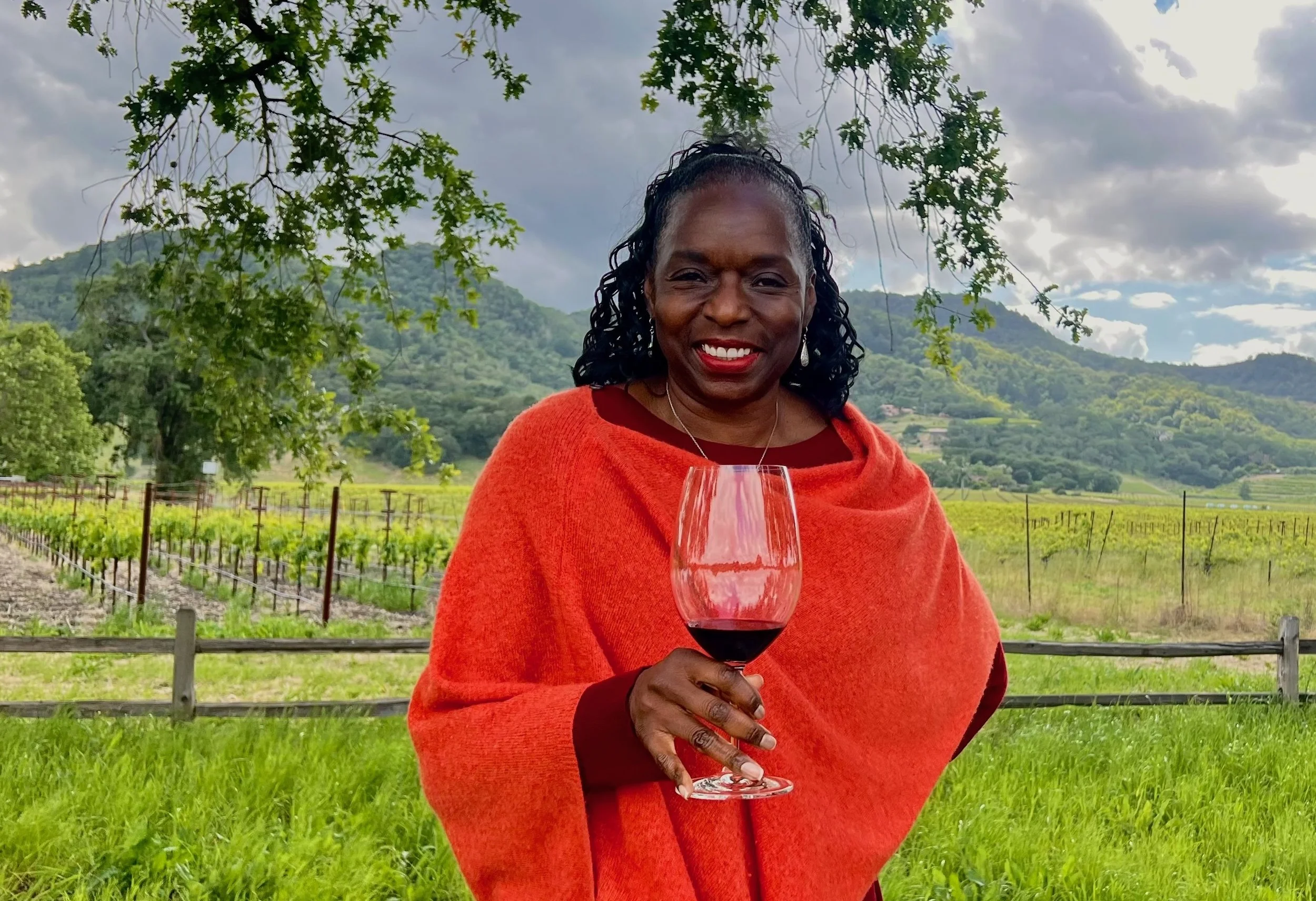
Three years after surgery to remove part of my palate and left jaw, Roy S. Johnson snapped this photo of me at Hill Family Wine Estate in Napa Valley.
July 27 is World Head & Neck Cancer Day, a day dedicated to raising awareness about cancers that can affect the mouth, throat, and larynx.
Three years ago, I became one of the few people in the world diagnosed with adenoid cystic carcinoma (ACC), a rare cancer that in my case was in a minor salivary gland in my hard palate. My journey began during a routine physical examination with two simple words:
“Say ahhh.”
Dr. Susan Gamble, my new primary care physician, noticed something on the roof of my mouth that had gone undetected despite my regular dental visits and meticulous oral hygiene. Multiple ENT appointments followed. Every examination, scan, and even the initial pathology suggested the lesion was benign. It wasn't until a year later, when UCSF's head and neck pathologists reviewed my biopsy, that I learned I had ACC.
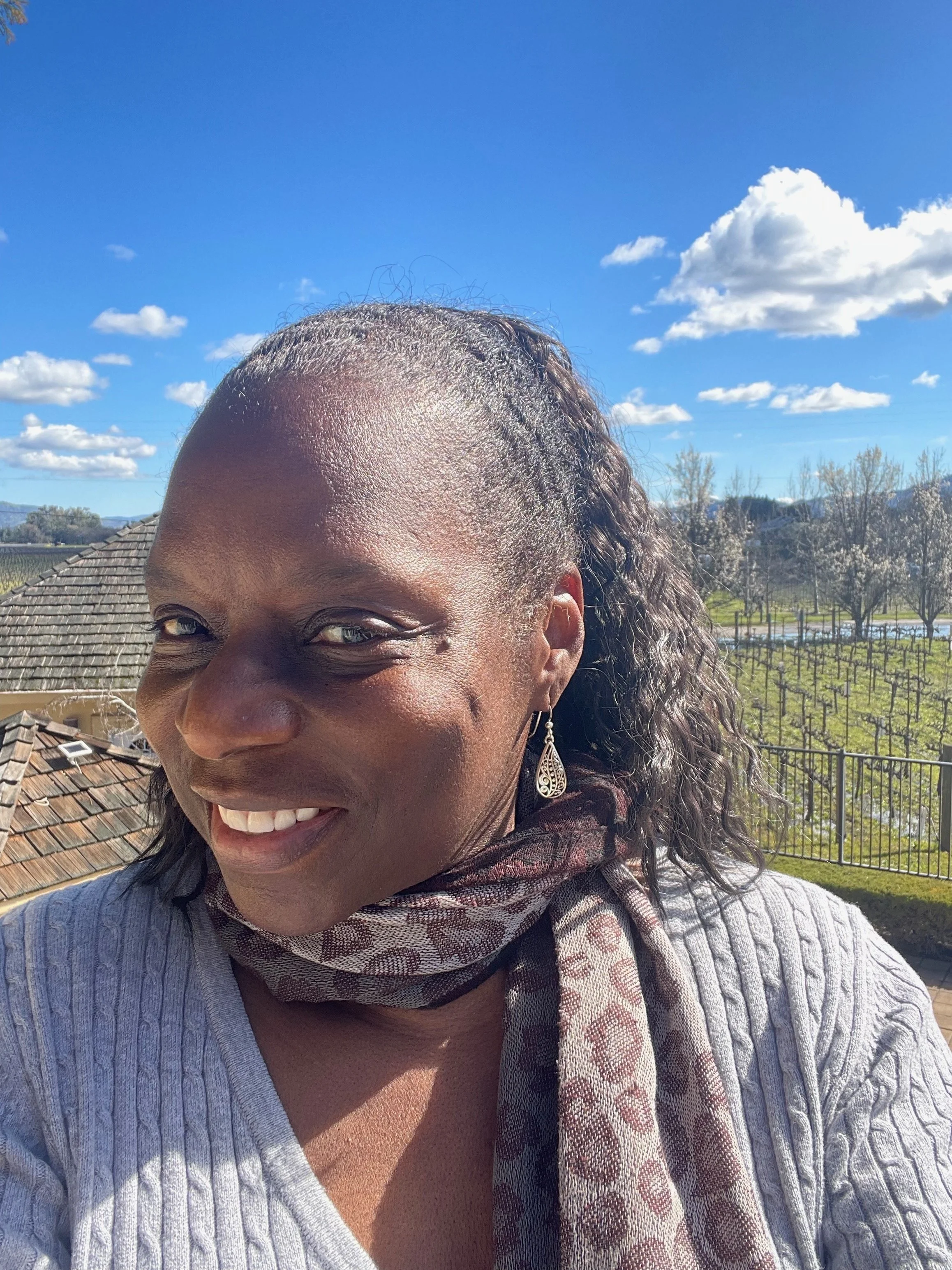
A selfie in Napa Valley on March 8, 2023, less than a month after I was diagnosed with adenoid cystic carcinoma and five weeks before surgery. I knew radiation was a possibility but prayed I didn’t need it.
In April, when my longtime friend and fellow journalist Roy S. Johnson asked if he could write about my experience for his Cancer Chronicles column, I agreed because awareness saves lives. Roy, who was diagnosed with prostate cancer a year ago this month, did not write about cancer as a tragedy or allow my diagnosis to become the entirety of my story. In this column, he wrote about friendship, resilience, vulnerability, humor and continuing to live fully while navigating an unpredictable disease.
He even wrote about dating after cancer. I am still not certain why he chose the headline, “After rare cancer, former sports journalist is surviving fabulously in Napa and dating. Or trying.” Just like he looked out for me when I was in media, perhaps he thought the article would produce a few eligible prospects. It did not. But I hope it encouraged people to read about a rare cancer they might never otherwise have heard of.
Thank you, Roy, for sharing my journey and providing a glimpse inside my life as a head and neck cancer survivor.
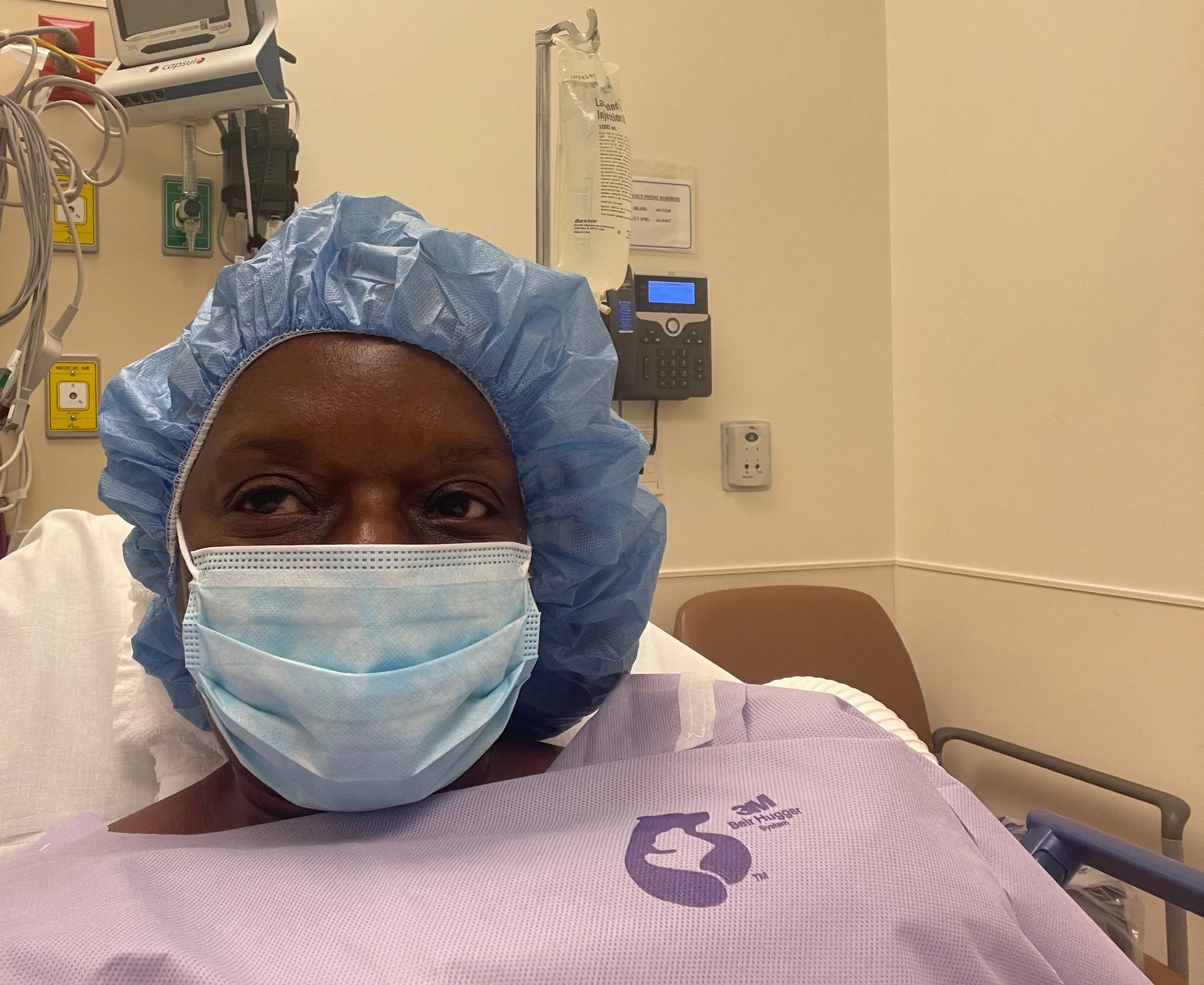
Minutes before being wheeled into surgery at UCSF on April 18, 2023.
Earlier this month, I virtually attended the annual Head & Neck Cancer Alliance Survivorship Symposium held in Boston. I attended in person last year when it was in Los Angeles, but when it is not held near me, I tune in remotely. Because of the time difference, that meant waking up at 5 a.m.
I wish I could have been there in person.
There is something powerful about being physically surrounded by people who understand experiences that can otherwise feel isolating. Last year, I stood in a restroom with other women who, like me, removed their obturators (a dental prosthesis) after eating so they could rinse their mouths and clean the devices. I perform that same routine in restaurant bathrooms all the time, hoping no one notices what I am doing.
Among my people, I did not have to hide it. I felt normal.
Listening to the speakers reminded me to thank God, once again, for how fortunate I have been. My journey has not always been easy, especially losing my job the day I returned from treatment that included surgery and 30 rounds of radiation. Cancer altered my body, interrupted my life and introduced uncertainties that will always be with me. It has also made me more resilient, more compassionate, more grateful and more intentional. Every survivor's path is different. Mine has taught me not to measure my life by what cancer took away, but by everything it has inspired me to do since. Including waking up at 5 a.m. on a Saturday to watch a symposium on my iPad while in bed.
The Symposium speaker who moved me most was Vanessa West-Hazard, a four-time head and neck cancer survivor and laryngectomy survivor. She communicates with the assistance of a voice prosthesis. Initially, I found it difficult to understand her speech, but as she slowed down, she was as clear as a bell. What struck me most wasn't her medical journey—remarkable as it is—but her sense of humor. I watched, mesmerized by her honesty, her perseverance and her ability to make us laugh despite her journey that has demanded so much from her.
Head and neck cancer survivors may emerge from treatment with changes to their speech, swallowing, eating, breathing, appearance or ability to communicate. Some of those changes are visible. Many are not. I look exactly the same as I did before my diagnosis. Sometimes I lisp but I have learned to slow down when saying certain words, or I avoid those words. Survivorship does not mean returning to the person you were before cancer. Often, it means learning how to live fully as the person you have become.
On World Head & Neck Cancer Day, I encourage everyone to pay attention to persistent changes in the mouth, throat, neck or voice. Keep regular medical and dental appointments. Ask questions. Seek another opinion when something does not feel right. Do not assume that something described as benign will always remain so.
I continue to build my luxury travel curator business (Napa Valley Noir), travel when possible, advocate for patients, mentor others facing head and neck cancer through Imerman Angels and embrace every opportunity to live a meaningful—and yes, fabulous—life.
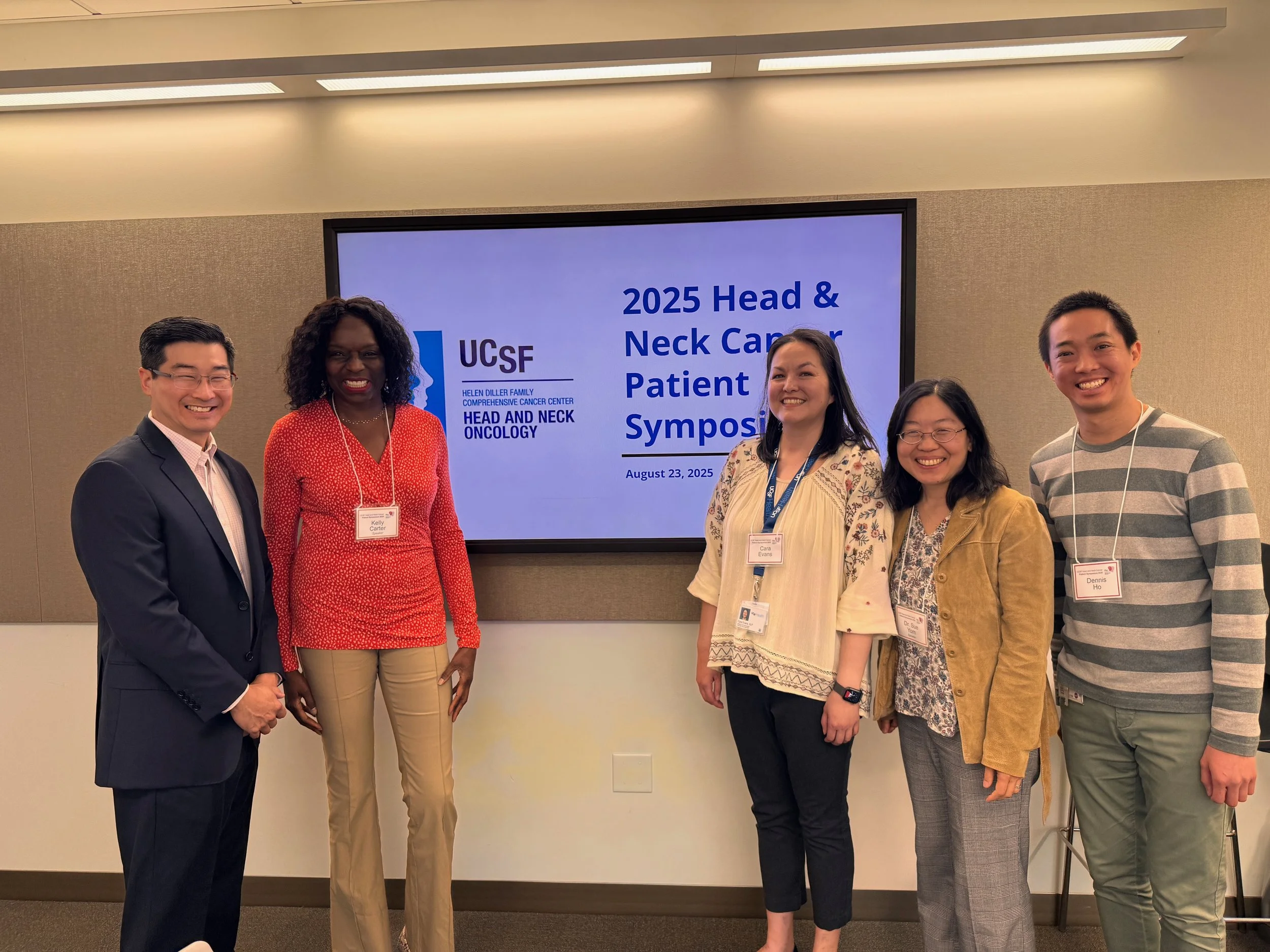
In 2025, I had the privilege of returning to UCSF as a speaker at its first Head & Neck Cancer Patient Symposium, standing alongside members of the team that helped me navigate my own diagnosis and treatment.
Cancer changed me, but it did not define me.
Every survivor has a story beyond the diagnosis. By sharing ours, we raise awareness, reduce isolation and remind someone else that they are not navigating this journey alone.
Thank you, Roy, for helping me share mine.